Remarks by President Denis Sassou N'Guesso at the celebration of Africa Day
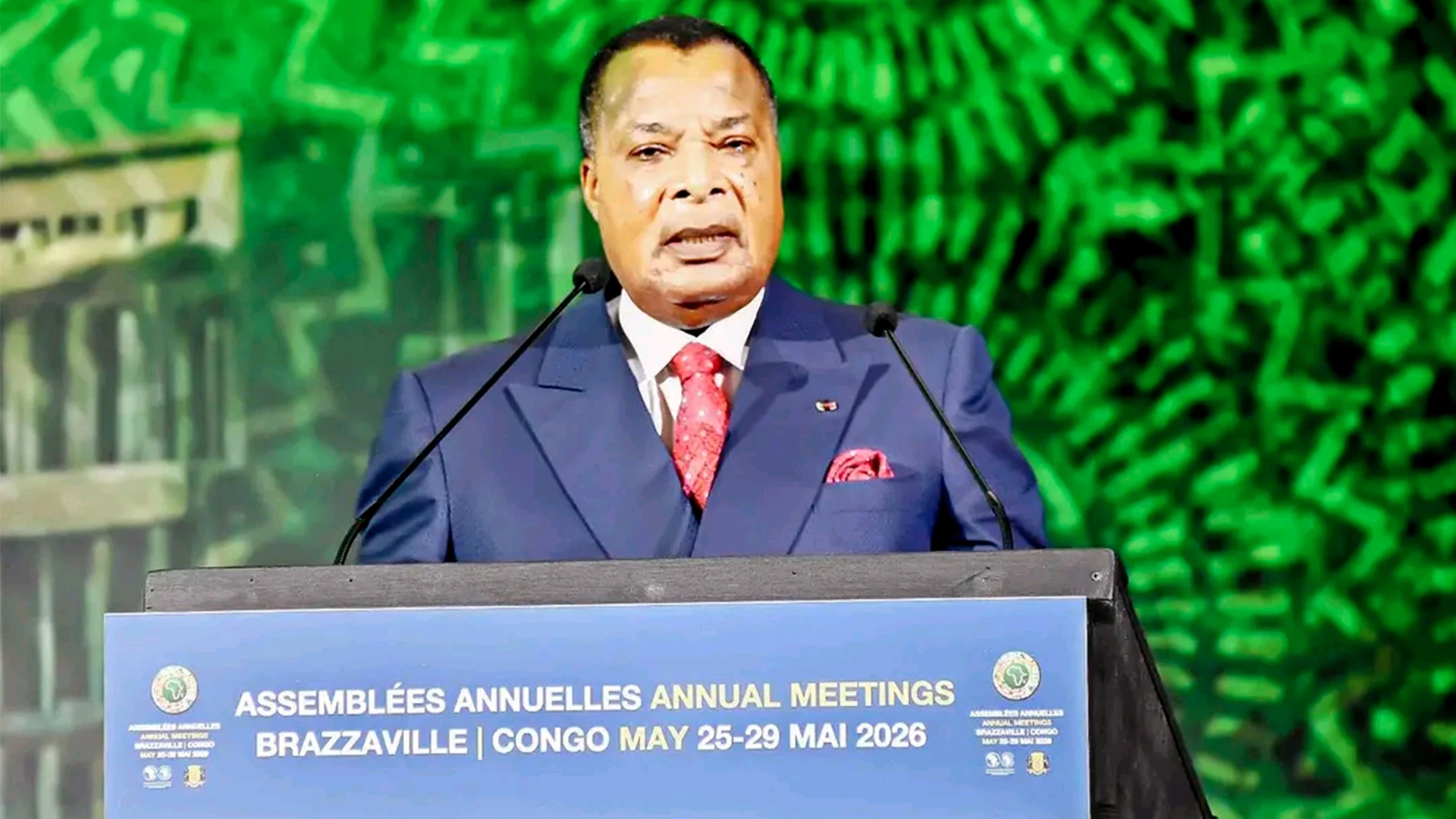
ADDRESS BY HIS EXCELLENCY MR. DENIS SASSOU-N’GUESSO, PRESIDENT OF THE REPUBLIC AND HEAD OF STATE, ON THE OCCASION OF AFRICA DAY
Brazzaville, May 25, 2026
Mr. President of the Gabonese Republic, Dear Brother;
* Ladies and Gentlemen, Representatives of the Heads of State;
* Mr. President of the Senate;
* Mr. President of the National Assembly;
* Mr. Prime Minister, Head of Government;
* Mr. Chairperson of the African Union Commission;
* Mr. President of the African Development Bank Group;
* Governors of the African Development Bank;
* Distinguished guests;
* Ladies and gentlemen;
I would like to extend my sincere thanks to the heads of state and government who, despite their busy schedules, have graciously honored us with their presence at this ceremony dedicated to the celebration of Africa Day on May 25, 2026.
In expressing my deep gratitude to the delegations and dignitaries present here, I extend a warm welcome to ALL and wish you a pleasant stay in the Republic of the Congo.
It is with honor and respect that I take the floor today on the occasion of the celebration of Africa Day, on May 25, 2026, a date steeped in history and marking the 63rd anniversary of the creation of the Organization of African Unity, which became the African Union on July 9, 2002, in Durban, South Africa.
This major event coincides with the start this morning, here in Brazzaville, of the 61st Annual Meetings of the AfDB Group, held in conjunction with the 52nd Annual Meeting of the African Development Fund.
Today we celebrate the ideals of unity and solidarity, sovereignty and integrity, social justice and development championed by the African Union, which align with the values of excellence, teamwork, integrity, professionalism, and transparency embodied by the AfDB.
Africa Day, celebrated on May 25 each year, marks the culmination of the struggles waged by the Fathers of African independence, who, at the cost of their blood or at the risk of their lives, dedicated themselves to Africa—a sacrifice forever etched in the marble of the continent’s memory.
Thus, we can say, with pride and gratitude, that today is their day.
The celebration of Africa Day elevates the immortality of their destiny, at times steeped in the blood of their self-sacrifice. Great men never die. On the throne of glory, as eternal heroes, they will remain forever.
In saying this, with great emotion, I think of:
- EDUARDO MONDLANE, First President of FRELIMO, Father of independent MOZAMBIQUE, assassinated in 1969.
- AMILCAR CABRAL, Pan-African politician from Guinea-Bissau, assassinated on January 20, 1973, in Conakry.
- SAMORA MOÏSES MACHEL, First President of the People’s Republic of MOZAMBIQUE, who died on October 19, 1986, in MBUZINI, South Africa, in a plane crash whose causes remain unclear.
- EMERY PATRICE LUMUMBA, Prime Minister from June to September 1960, a leading figure in the independence of the Democratic Republic of the Congo, assassinated on January 17, 1961.
- HODJIA HENDA, hero and key figure of the Popular Movement for the Liberation of Angola, a martyr who gave his life for the cause.
- STEVE BIKO, South African black activist, one of the leading figures in the struggle against apartheid, murdered in police custody.
- MARIEN NGOUABI, from 1969 to 1977, President of the People’s Republic of the Congo, my country, assassinated on March 18, 1977.
Through his ardent support for liberation struggles in Africa, he left an indelible mark on the achievements of peoples on the path to freedom, justice, and prosperity.
Thanks to the remarkable commitment of its sons, Africa, though ravaged by centuries of slavery followed by long decades of colonization, has managed to gradually rise again. It faces, with faith and courage, the shortages and other recurring challenges.
In this regard, I pay a heartfelt tribute to these valiant fighters for African freedom and emancipation, notably:
- KENNETH KAUNDA of Zambia, Father of Independence and the country’s first President.
- KWAME NKRUMAH, Ghana’s first President, a Pan-Africanist who advocated for the continent’s total independence and the creation of the “United States of Africa.”
- AHMED SEKOU TOURE, one of the leaders of the RDA Party, an African nationalist who, through a massive “NO” vote, rejected the “Franco-African Community” proposed by General Charles DE GAULLE during the 1958 referendum.
- LEOPOLD SEDAR SENGHOR, Senegal’s first president in 1960, a leading figure in the decolonization of French-speaking Africa.
- FELIX HOUPHOUET-BOIGNY, former President of Côte d’Ivoire, a pioneer in the struggle for Africa’s liberation, autonomy, and independence.
- MODIBO KEITA, the first African Vice President of the French National Assembly. He proclaimed the independence of the former French Sudan, which later became the Republic of Mali.
- Julius NYERERE, former President of the Republic of Tanzania, champion of African-style socialism, founder of the independence party, the African National Union of Tanganyika.
- JOMO KENYATTA, former independence activist and former President of the Republic of Kenya.
- BARTHELEMY BOGANDA, a great champion of Pan-African ideals, driven by the desire to create the United States of Central Africa.
Founding father and first President of the Central African Republic from 1958 to 1959, who died on March 29, 1959, in a plane crash that remains shrouded in mystery.
- GAMAL ABDEL NASSER, an Egyptian nationalist who advocated for Arab unity and was committed to the struggle against British oppression. A leading figure in the Egyptian Revolution and the rise of the Third World as a political force, he was a key figure in the Non-Aligned Movement.
- King MOHAMMED V of Morocco, an opponent of Spanish rule and the main supporter of the Moroccan independence movement, ISTIQLAL. Father of the modern Moroccan nation and supporter of liberation struggles in Africa.
- AHMED BEN BELLA, a fighter for Algerian independence, leader of the National Liberation Front (FLN), and former President of the People’s Democratic Republic of Algeria.
- AGOSTINHO NETO, Angolan leader opposed to Portuguese occupation, former President of the Republic of Angola, and President of the Popular Movement for the Liberation of Angola (MPLA).
- NELSON MANDELA, former leader of the ANC, former President of the Republic of South Africa after 27 years of imprisonment for his commitment to the struggle against the apartheid regime established by the white minority in his country.
- KAMUZU BANDA, first President of Malawi, initiator of a referendum on a multi-party system, defender of women’s rights.
Clearly, our account cannot be exhaustive; therefore, allow me to include in this tribute those valiant sons of Africa who, having fallen with honor and dignity in the struggle for the continent’s liberation, have not been mentioned.
Likewise, let us acknowledge that the struggle for Africa’s liberation was also led by eminent and courageous women, who carried the message of freedom, justice, brotherhood, and prosperity throughout the world, such as:
- TCHIMPA VITA, an African prophetess from the Kingdom of Kongo who was committed to the struggle against colonization;
- WINNIE MANDELA, a great ANC activist and icon of the struggle against apartheid;
- MYRIAM MAKEBA, a South African artist whose musical works called for the liberation of the peoples of Africa, beyond forests and oceans.
There are no great effects without great causes, nor extraordinary feats without an extraordinary heart.
A great heart can only give birth to giants. It gives birth to designs worthy of itself.
These are our heroes who sacrificed themselves for the continent. To sacrifice oneself for Africa, one had to have a big heart. That is what we call a mission worthy of him.
It was PLINY THE ELDER, a Roman writer and naturalist of the 1st century, who asked:
“What novelties come to us from Africa?” simply because, at the time, it was reported that in Africa wild animals mated with one another, even across different species, giving birth to monsters.
For many people, Africa was the source of strange and monstrous novelties.
PLINY THE ELDER, who nevertheless lived in ROME, was well aware of the existence of prestigious African civilizations, notably that of the Pharaohs in Egypt.
He could not have been unaware that Julius Caesar’s strategic alliance with Cleopatra, intended to consolidate the Queen’s throne and place Egypt under Rome’s protection, aligned itself with a millennia-old civilization that, from the heights of its imposing pyramids, observed and could describe a significant portion of human history.
Nor could he have imagined that the city of Carthage—a renowned strategic stronghold that, under the leadership of General Hannibal, dealt a severe blow to the Roman Empire during three wars between 264 and 146 B.C.—was located in Africa.
Closer to our time, in the 13th century, the Emperor of Mali, MANSA MOUSSA, possessed a colossal fortune, a far cry from the “Africa of poverty” evoked by the continent’s detractors.
By examining the course of history, science has ultimately provided tangible answers to those who deny the existence of African civilizations.
The discovery of Homo sapiens fossils in Morocco, the identification of Toumaï in Chad as the oldest ancestor of the human lineage on the planet, and the discovery of the oldest skeletons in the Rift Valley (Ethiopia, Kenya, Tanzania) attest to the primacy of African man and his civilization regarding the origins of the human race.
Because humankind traces its origins to the African continent, as confirmed by numerous world-renowned archaeologists, let us proudly proclaim that Africa is the Cradle of Humanity.
The fact remains that there is no shortage of arguments to fuel the debate on these issues.
However, backed by relevant and irrefutable scientific knowledge, the universal recognition of the developments inherent in the origins of humanity gives Africa a significant pioneering role in terms of its responsibility to address development challenges.
A famous landscape architect once saw Africa as the shape of a key, an instrument typically used to open locks. If we apply this image to the lens of the global economy’s evolution, our continent emerges as the crucible of nations’ prosperity and peoples’ well-being.
Hence, “What new developments are emerging from Africa?”
Without a doubt, Africa will be the indisputable key to unlocking the door to humanity’s future, at a time when climate challenges are increasingly becoming a pressing reality for the survival of the human species.
“What new developments are emerging from Africa?”
Objectively speaking, with more than 600 million hectares of forests, Africa remains humanity’s second green lung thanks to its immense vegetation cover, which is at the heart of current ecological challenges linked to the planet’s survival.
In this regard, allow me to emphasize the need to carefully prepare for the implementation of the “United Nations Decade on Afforestation and Reforestation, 2027–2036,” adopted by the UN General Assembly at the initiative of my country, the Republic of the Congo.
I call once again for the international community to mobilize without delay to ensure the effective implementation of this resolution.
“What news comes to us from Africa?”
This 2026 Africa Day is celebrated under the theme: “Ensuring sustainable access to water and safe sanitation systems to achieve the goals of Agenda 2063.”
It is well known that Africa is home to significant freshwater reserves thanks to its considerable hydrological potential, fed, among others, by the Congo, Nile, Zambezi, and Volta rivers. Furthermore, it is noted that in Africa, equatorial and tropical zones benefit from high rainfall.
“What new developments are emerging from Africa?”
By 2050, Africa will have a population of 2.5 billion, mostly young people, who will serve as a workforce capable of developing its largely untapped—or even untouched—resources in various sectors such as forestry, mining, hydrocarbons, and energy.
“What new developments are emerging from Africa?”
We must persevere in our efforts to give substance to the African Continental Free Trade Area (AfCFTA), which stems from economic Pan-Africanism, a development-oriented Pan-Africanism aimed at promoting intra-African trade, the creation of a single, integrated market for goods and services across the entire continent, and greater facilitation of the free movement of people and goods.
Today, the world is undergoing a transformation, and Africa cannot achieve development without road, rail, airport, maritime, and energy infrastructure.
When it comes to energy, nearly 600 million Africans currently lack access to electricity, representing about half of the continent’s population.
To address this gap, the World Bank Group and the African Development Bank Group have launched a mission to provide electricity to 300 million people on the continent by 2030.
Known as MISSION 300, this historic initiative combines increased investment in infrastructure with comprehensive reforms across the entire electricity supply chain.
It will not only transform the daily lives of people and businesses and provide electricity to hospitals and schools, but also create job opportunities and foster investment and trade.
This initiative is now underpinned by the Dar es Salaam Declaration on Energy, adopted on January 28, 2025.
Given their particularly high costs, no country—regardless of its potential—can undertake the construction of development infrastructure on its own, relying solely on its own resources.
For Africa, this means not following the well-trodden paths of selfishness and narrow nationalism to seek refuge under any old shelter.
For Africa, this means showing solidarity, speaking with one voice, and strengthening stability through large subregional groupings and regional economic development communities.
Whenever they have come together, African countries have been capable of great victories, notably negotiating strategic partnerships, mobilizing adequate funding, and accelerating their march toward development.
* Mr. President of the Gabonese Republic, Dear Brother;
* Ladies and Gentlemen;
The struggle for freedom is inseparable from the struggle for peace. Allow me to reaffirm my commitment to the Libyan cause, for which my peers have entrusted me, since 2016, with the mandate to lead the African Union High-Level Committee on Libya.
I would also like to recall the other recurring crises in the Sahel, Sudan, South Sudan, and eastern Democratic Republic of the Congo.
Past generations bequeathed to us the Organization of African Unity, now the African Union.
Today’s priorities are primarily focused on development. The longest journey begins with a single step. As far as we are concerned, and in connection with:
- the consolidation of our commitment to the vision of the Fathers of African independence;
- the freedom and emancipation of African peoples;
- the acceleration of the free movement of people and goods across the continent;
- the integration of states, leading eventually to the use of a single African passport;
- the realization, once again, of my commitment to a united, sovereign, and prosperous Africa;
I take this solemn occasion to announce today that, as of January 1, 2027, entry into the Republic of the Congo will no longer require a visa for all African peoples, subject to a few minimal administrative and security provisions.
The Republic of the Congo, as it accelerates its march toward development, will continue to contribute to the building of an Africa that is resolutely committed and determined on the path to Unity and Prosperity.
* Long live Africa!
* Long live the African Union!
* Happy holiday to all!
Thank you.